
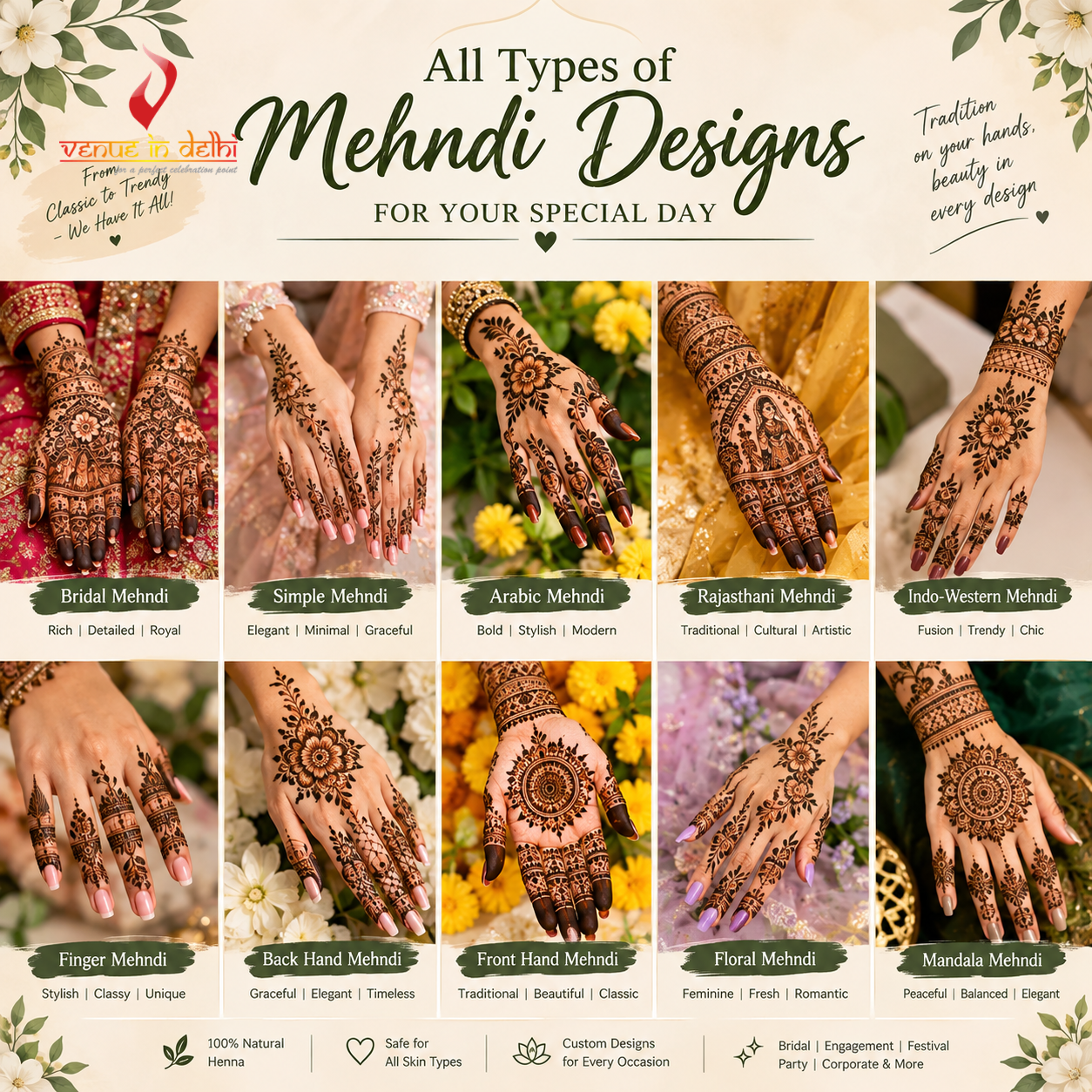
Mehndi Designs
Mehndi Designs: The Complete Guide to All Styles for Your Special Day
Mehndi is not merely an aesthetic. For an Indian bride, it symbolizes the evening before the wedding, the getting together of cousins, the scent of organic henna, and a hand that will be colored for days after the event. Picking up the right design is very important, just like picking the lehenga. Here is a guide to the prominent styles of mehndi for you to tell your artist.
Indian Mehndi Traditional
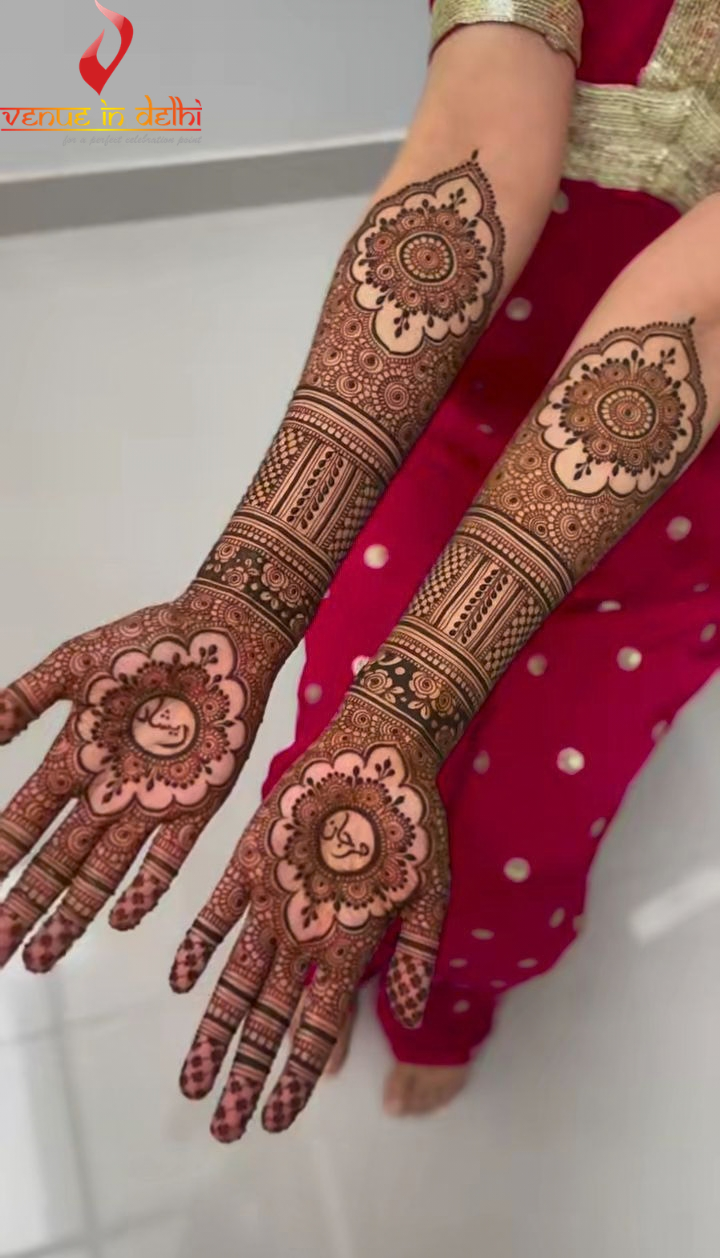
The original style. Dense, complex, and deeply symbolic, Indian mehndi fills the palm with a central mandala or a round gol tikki along with paisley, lotus, peacock figures, and checkered work. Often, the fingers are covered from bottom to top with the design extending above the wrist and on to the forearm. It is this style that most brides select since the effect is appealing in photos.
Arabic Mehndi
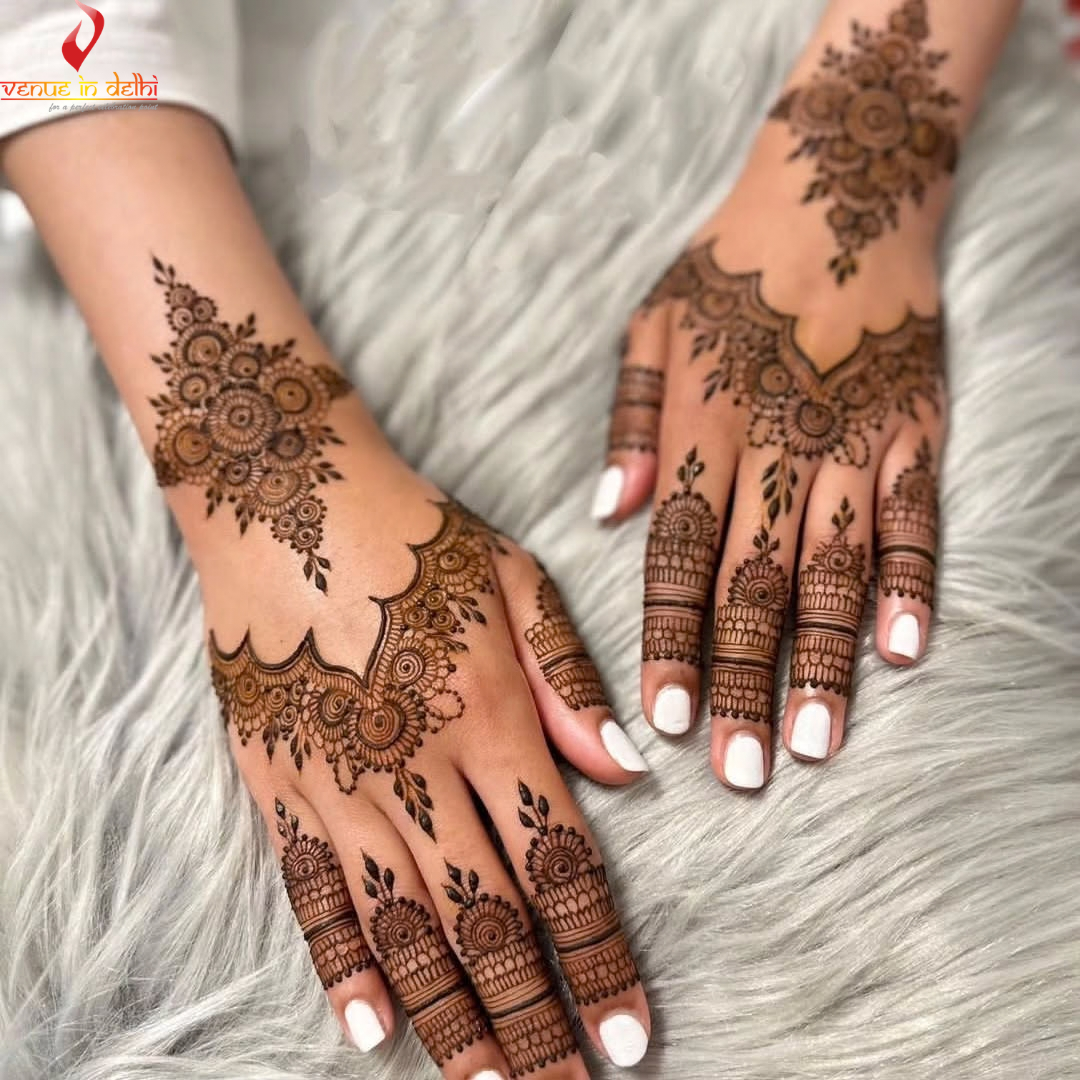
Arabic designs are bolder, more flowing and far less dense. Instead of covering the entire palm, it makes its journey diagonally on the palm in a trail or vine like prints making use of large flower patterns, thick outlines and some empty spaces. The lack of detail leads to easy and quick application of the Arabic Mehndi and hence it is opted by bridesmaids, sisters and even guests who want henna on the same evening.
Indo-Arabic Mehndi
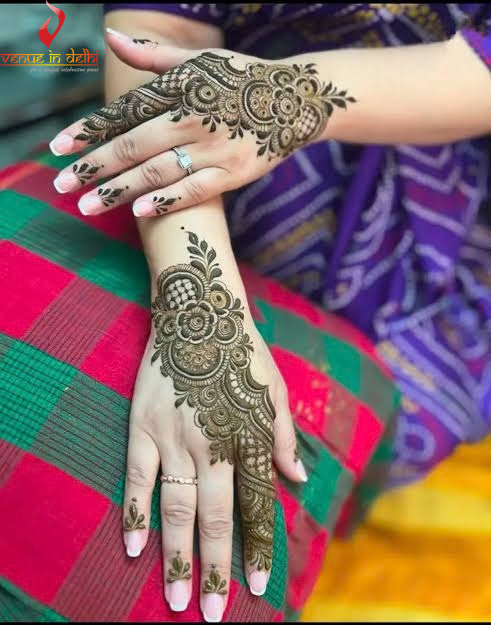
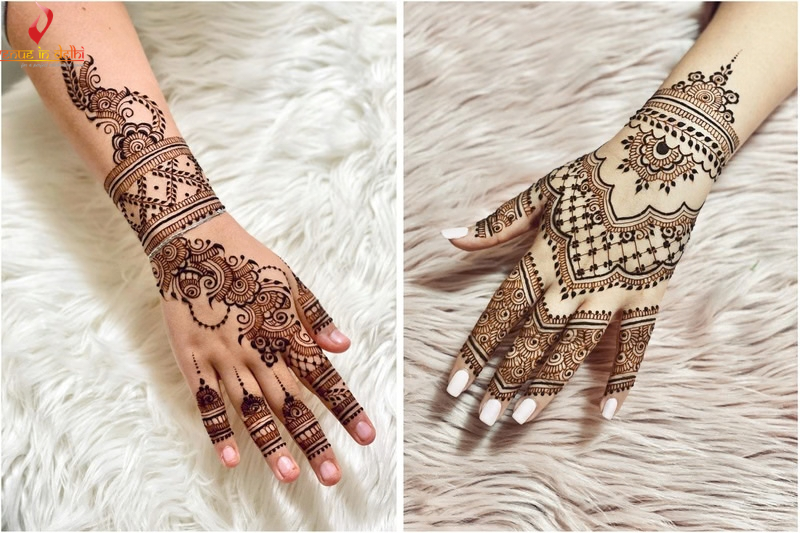
Just as the name suggests, it combines the fullness of Indian Mehndi with the flow and glamour of Arabic design. Here one can see large floral patterns with greens and gorgeous vines along with shading patterns and dotted designs with net patterns within the life completely.
Pakistani Mehndi
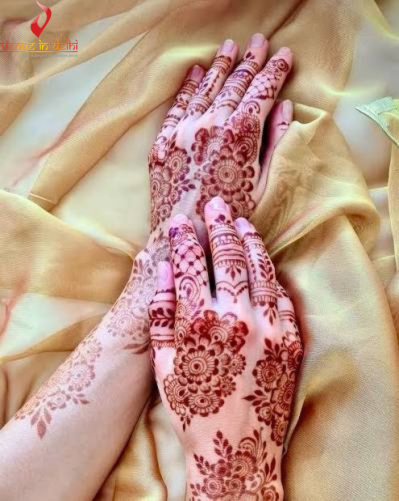
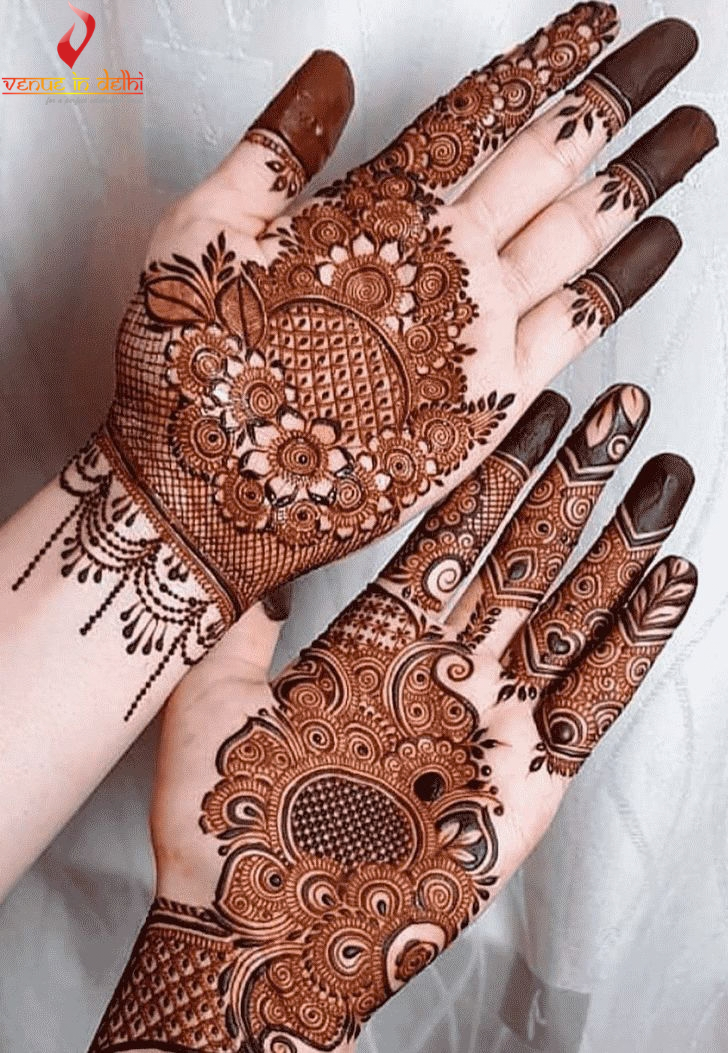
Extremely intricate and very ornamental. Pakistani mehndi uses ultra-fine lines, heavy shading, and geometric jaali patterns that cover the hand almost completely, often continuing right up to the elbow. Expect long sittings — a full bridal Pakistani design can take four to six hours per side.
Mehndi of Rajasthan and Marwar
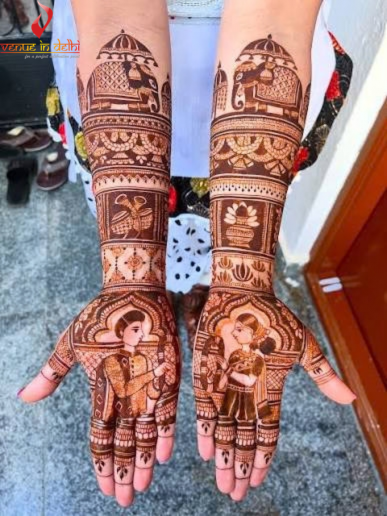
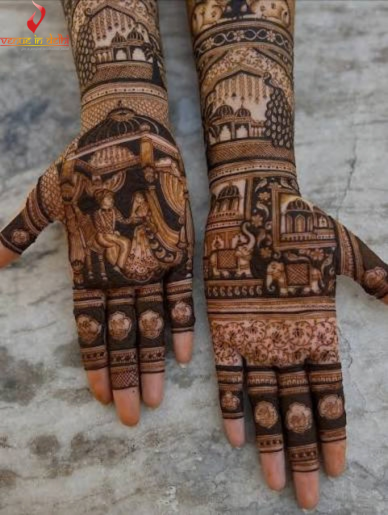
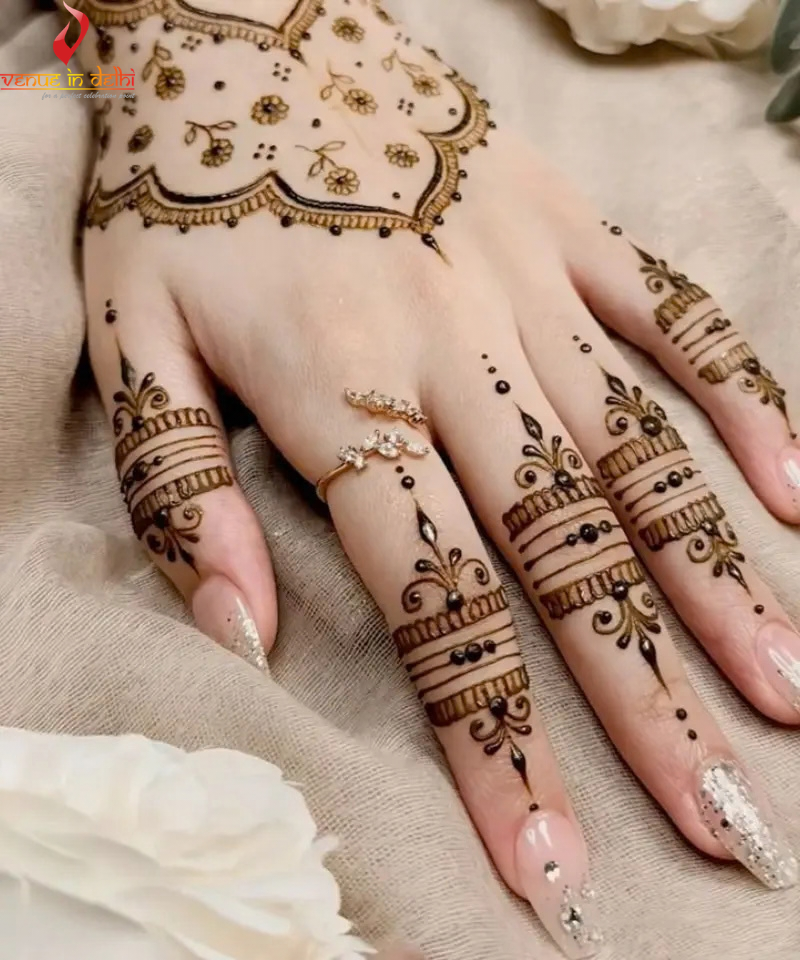
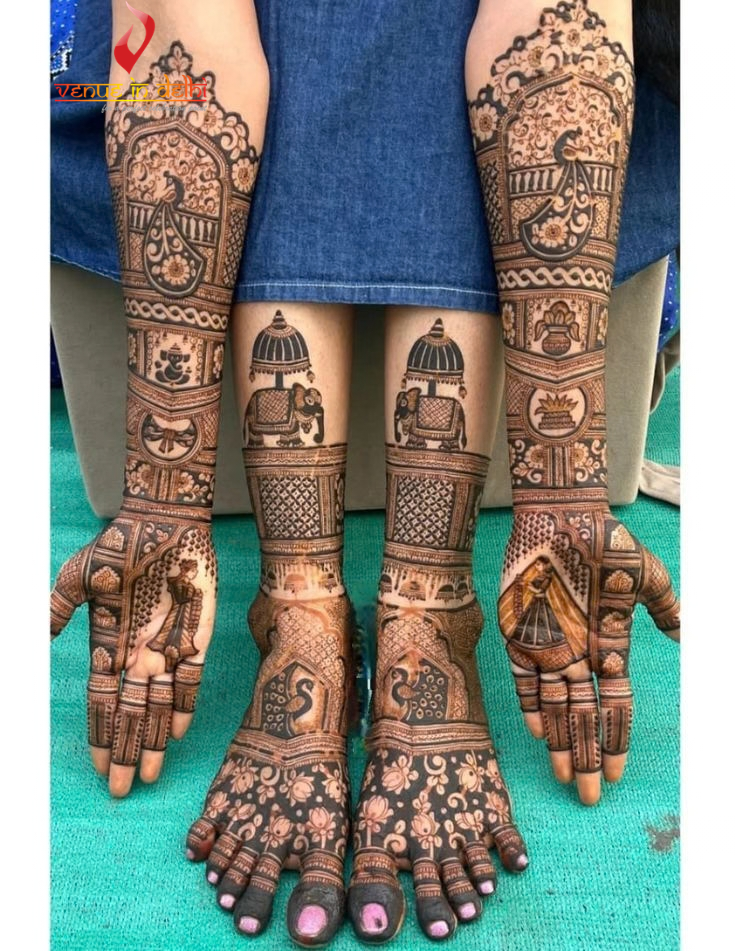
Rajasthani Mehndi has the appeal of colors, brightness, and a lot of stories. It's composed of photos of weddings, brides and grooms along with pictures of elephants, bullock carts, towers and some folkloric symbols. While Marwari Mehndi may seem to be similar to Rajasthani Mehndi, it is more symmetrical in appearance. Experience with Mehndi during wedding celebrations can be a great way to tell one's wedding stories through Mehndi.
Mehndi in Mughal Style
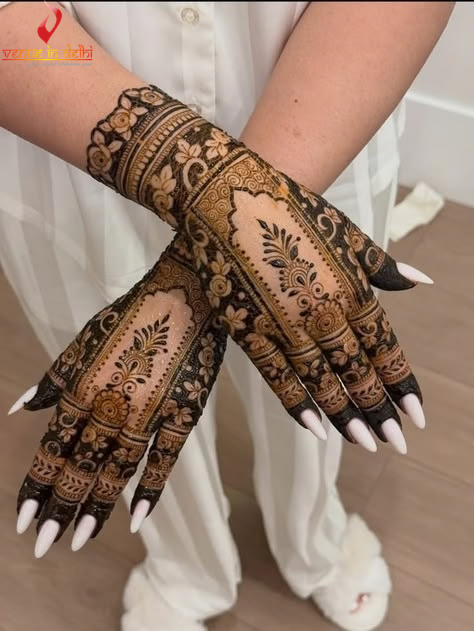
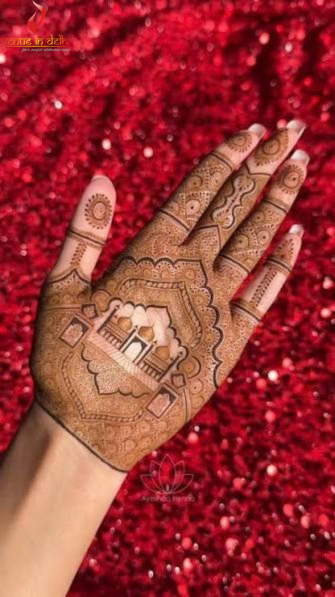
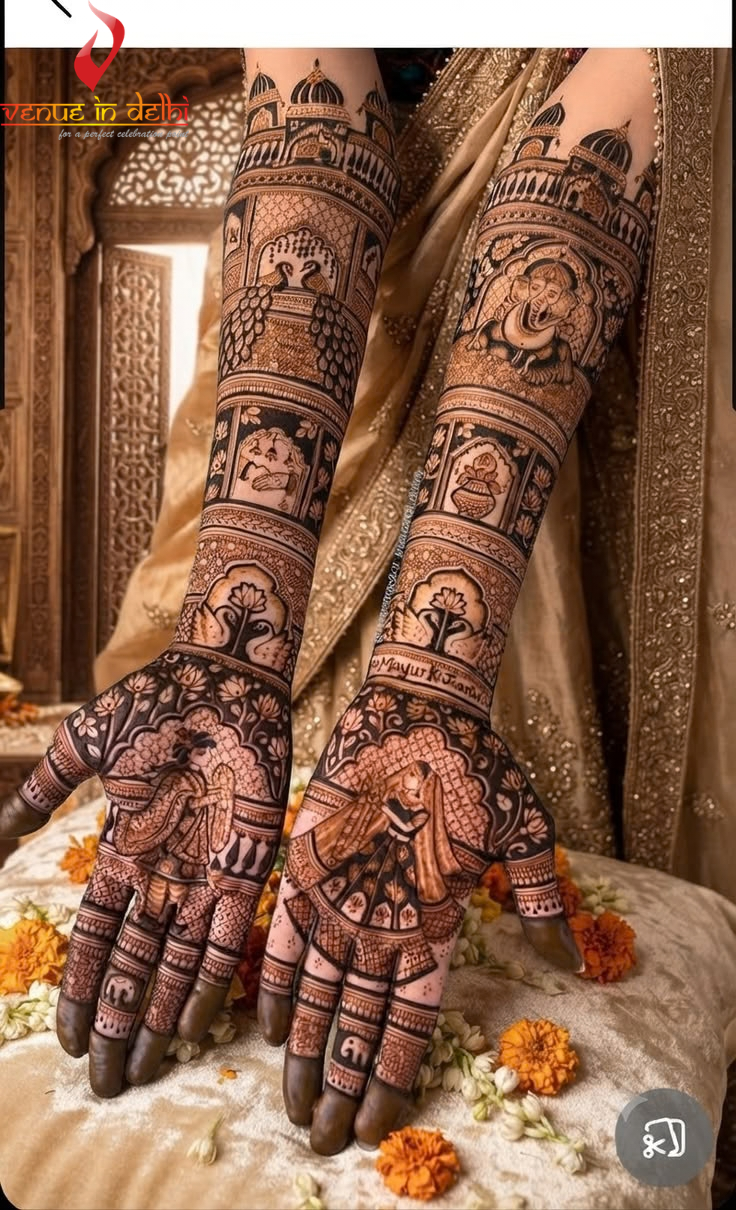
This style is based on Mughal architecture and miniature art of the time and is characterized with arches, domes, medallions and decorative borders. The mehndi in this style is elegant and structured and is particularly good looking on the back of the palm as there is a lot of place for the patterns to develop.
Mehndi in Moroccan Style
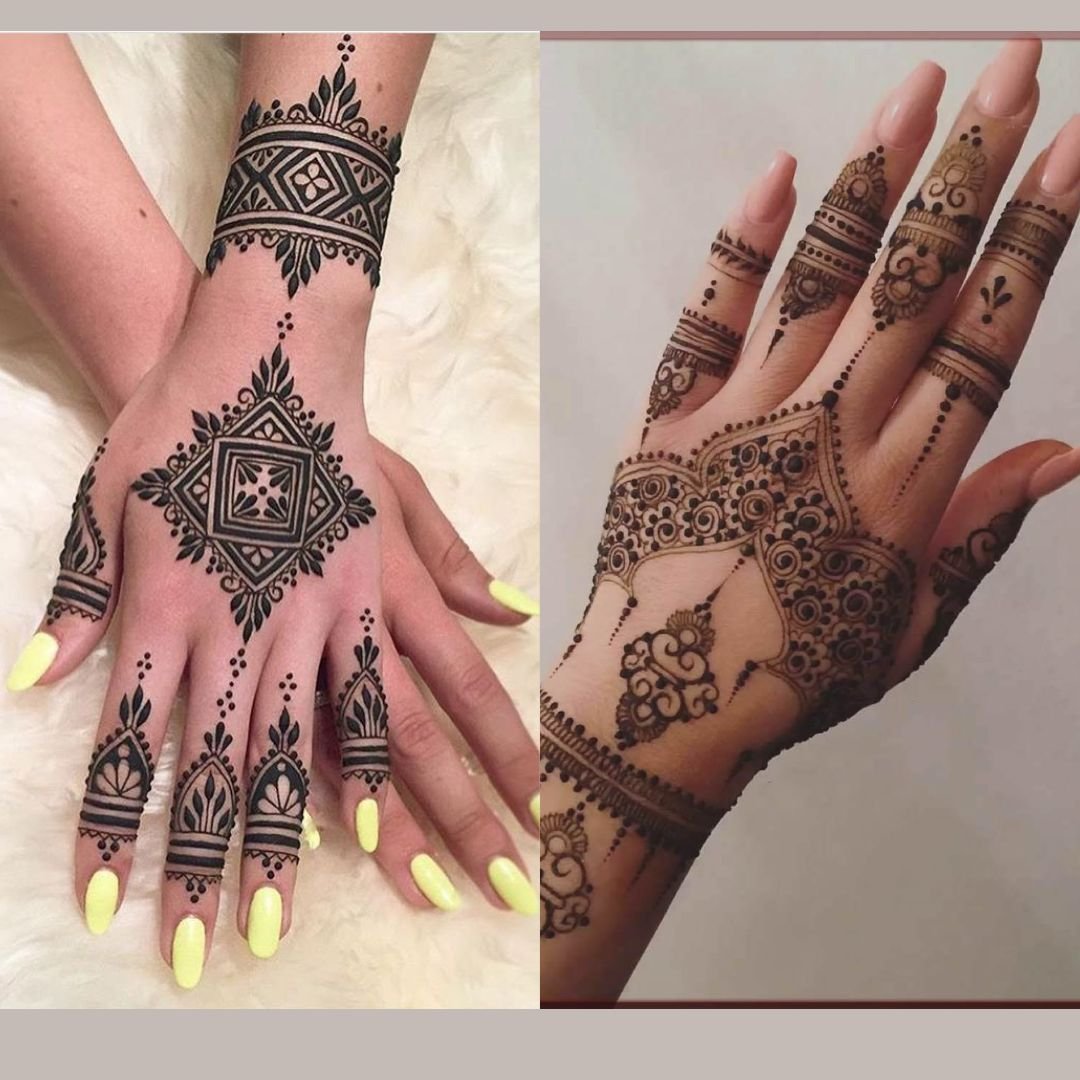
Moroccan style applies geometrical patterns which consist of chevrons, triangles and diamonds and does not use any floral decoration at all. This mehndi looks especially good on feet and shins and is suitable for modern brides who are not interested in traditional forms.
Minimal and Modern Mehndi
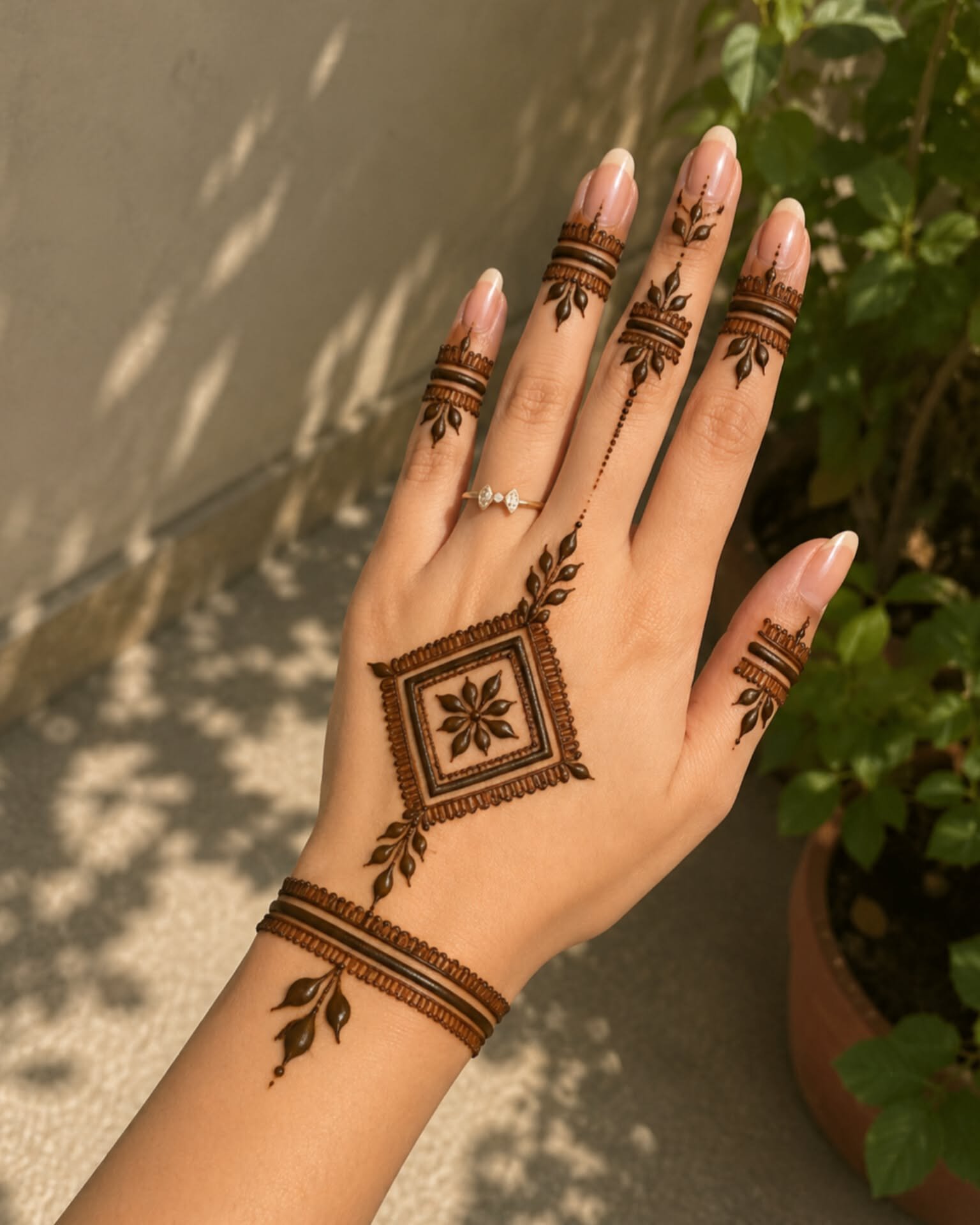
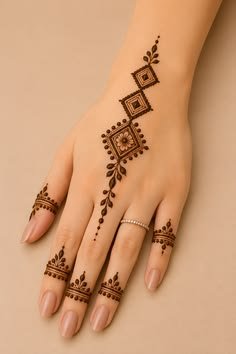
Mehndi seems to be the preferred choice for a number of brides who want to celebrate their engagement, mehndi ceremony and destination wedding. Think of some basic designs like a straight line running through the fingers of hands, a miniature mandala design on the surface of the palm, thin bracelets made up of many tiny dots, or a small leaf designed with fine detailing. Minimalistic mehndi takes less than one hour to be ready, which does not prevent the bride from looking trendy and elegant.
Bridal Mehndi with Full Hand and Portrait
Full bridal mehndi covers both hands as well as both feet to the calf area. Brides these days prefer to add a personal touch, like groom's face, couple's initials, wedding date, or either their portrait. Jewellery mehndi includes design in shape of rings, bangles, kadas, anklets and so on.
Feet and Leg Mehndi
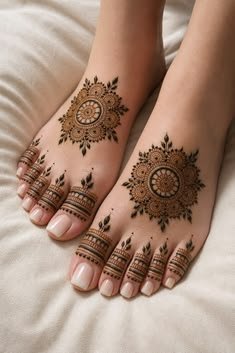
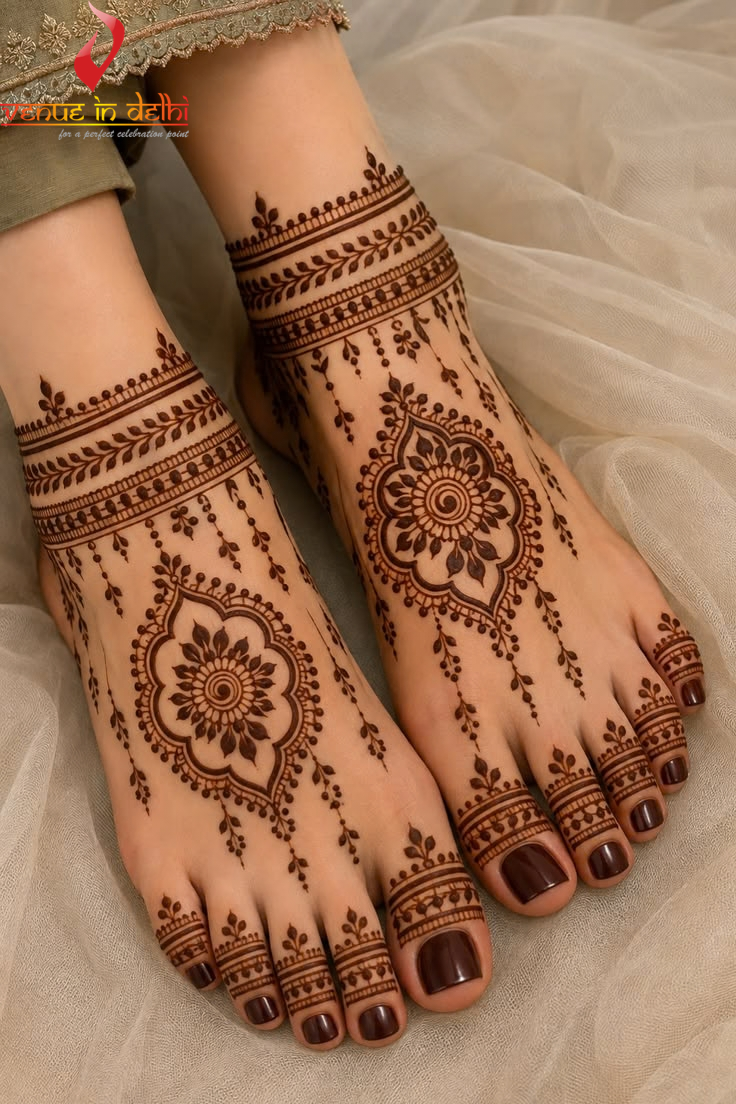
Feet designs are usually mirrored, with a dense pattern along the top of the foot, a band around the ankle and vine work running up the calf. Because the lehenga hides most of it, keep the ankle area strong — that is the part people actually see.
Glitter, Stone and White Mehndi
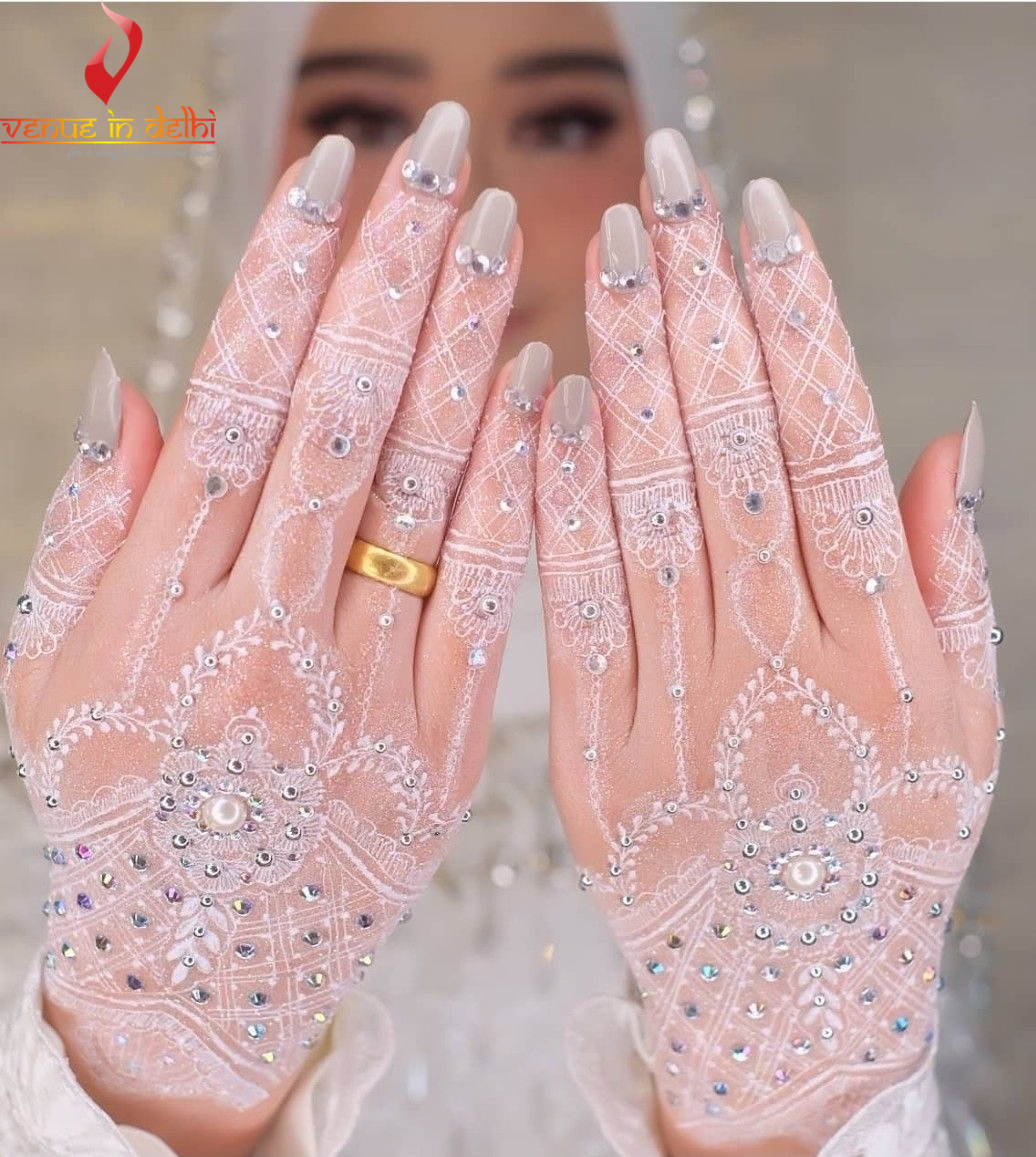
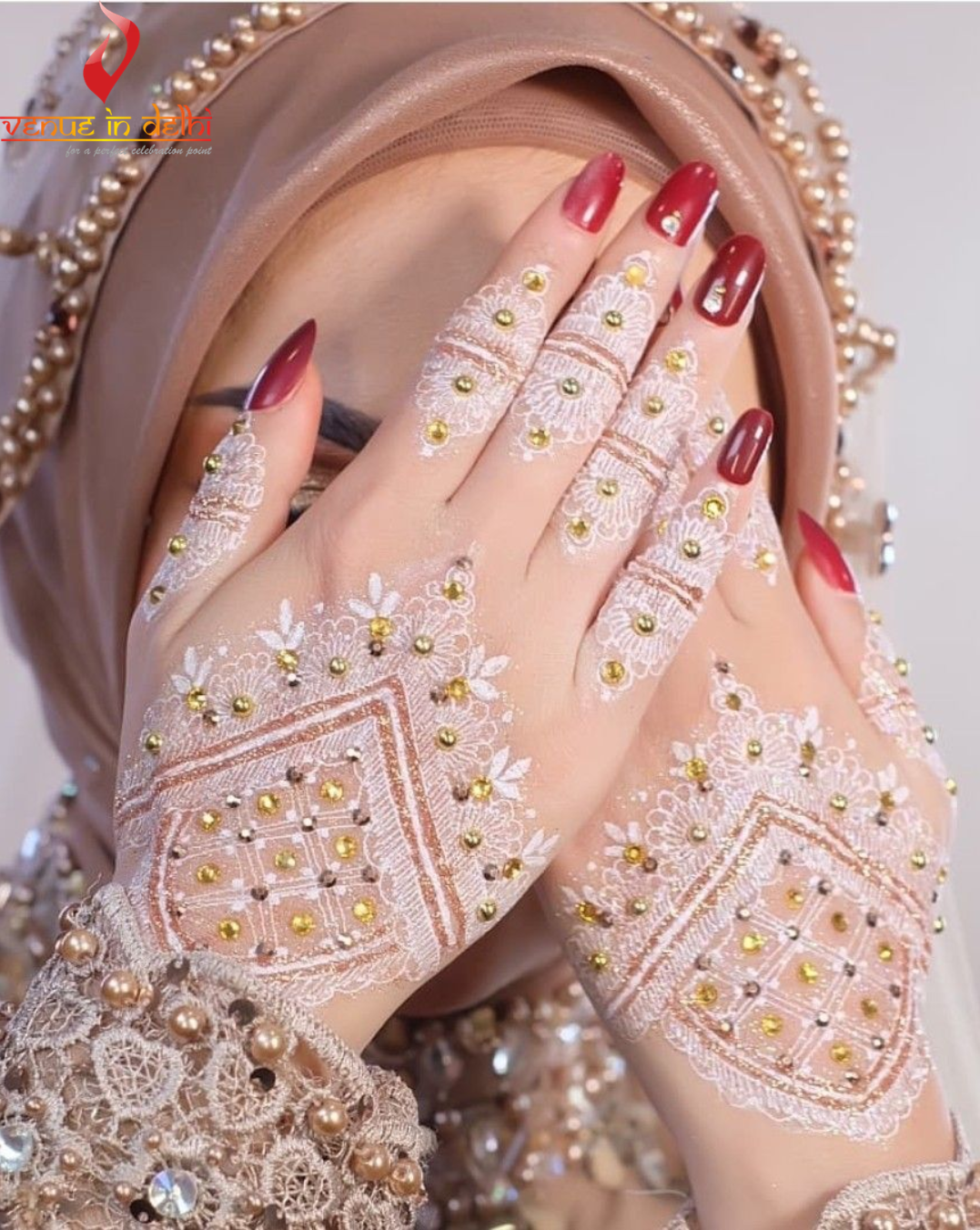
For sangeet night or a cocktail look, artists add glitter liners, adhesive stones and metallic foil over the dried henna. White henna (a body-safe cosmetic paste, not real henna) is used for photoshoots and pre-wedding shoots, and it washes off in a day or two.
Groom's Mehndi
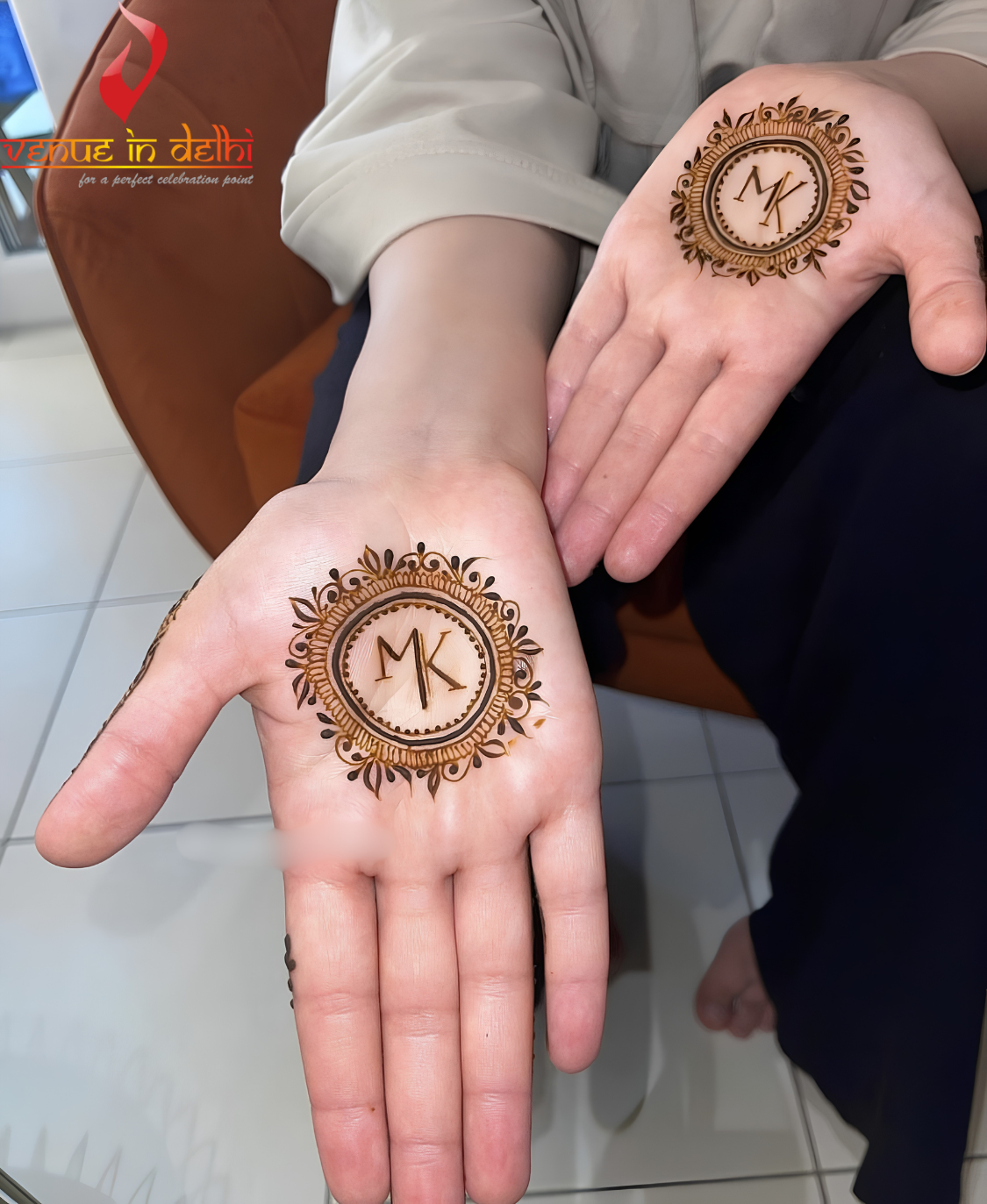
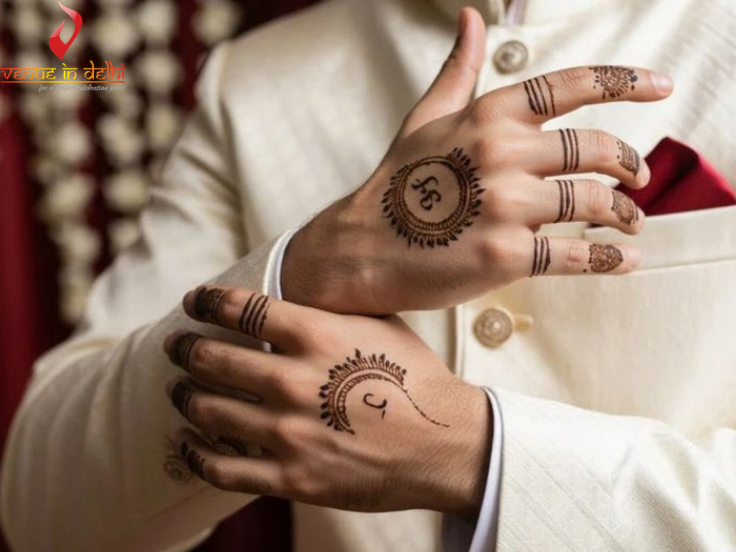
Simple and symbolic: initials, a small mandala in the centre of the palm, an Om or Ek Onkar, or a slim band on the wrist. Most grooms prefer something that fades quickly.
Advice for Creating a Darker Stain
Make sure the skin is clean and not oily, don’t take off the paste for six-eight hours, and remove it with a knife rather than by washing it.Avoid water for the first twelve hours. Always book your artist at least a month ahead — the good ones get taken early in wedding season.
Frequently Asked Questions
1.How long brides have to wait to apply mehndi? According to professional advice, the proper time to have mehndi applied is no later than three days before the wedding since the color should take effect fully within two days after washing out the paint.If individuals apply henna just before the wedding, then there are chances that the outcome might not be as expected.
2. What mehndi designs should brides prefer? Among the best designs that brides can ask for is the traditional Indian or Indo-Arabic mehndi design since it covers hands up to elbows, therefore creating fabulous bridal images. One can even add some personal twists or the design of bridal ornaments to make it look unique.
3.Applying bridal mehendi typically includes both hands (up to elbow) and legs. This process takes between 4 to 7 hours based on the detail of the mehendi design, as the most detailed designs such as heavy Rajasthani and various Pakistani mehendi designs take the longest to put on.
4.In what way is Arabic mehendi not the same as Indian mehendi? Indian mehendi involves intricate mehendi designs which mean the entire palm contains mehendi designs unlike Arabic mehendi which only has less complicated designs with very bold and visible outline of flowers.
5. How can we get a dark color of mehendi?
It is a must to apply the mehendi correctly.
6. Is it safe to apply black mehndi? The response is decidedly negative. The black mehndi consists of hazardous chemical, which is the PPD. It is popular as a cause of burns, blisters, and skin problems in the long-run. Thus, using natural mehndi, which can provide you the orange color initially and then change to maroon later, is better.
7. How long does mehndi last? The natural mehndi can last about 1-3 weeks, and it quickly fades on the feet and other body parts that are washed often, but stays for a longer period on the area of palm.
8.The cost of mehndi can vary from 5,000 INR to 25,000 INR based on the degree of skill of the artist as well as the kind of mehndi design.
9.Can mehndi be applied on legs while wearing lehenga? Yes, and it is traditional. Since most of the design stays hidden, ask your artist to keep the ankle band and the top of the foot detailed — that is the visible portion.
10. What mehndi design should bridesmaids choose? Arabic or minimal designs are ideal. They look elegant, take under an hour, and let a large group finish getting done in a single evening.